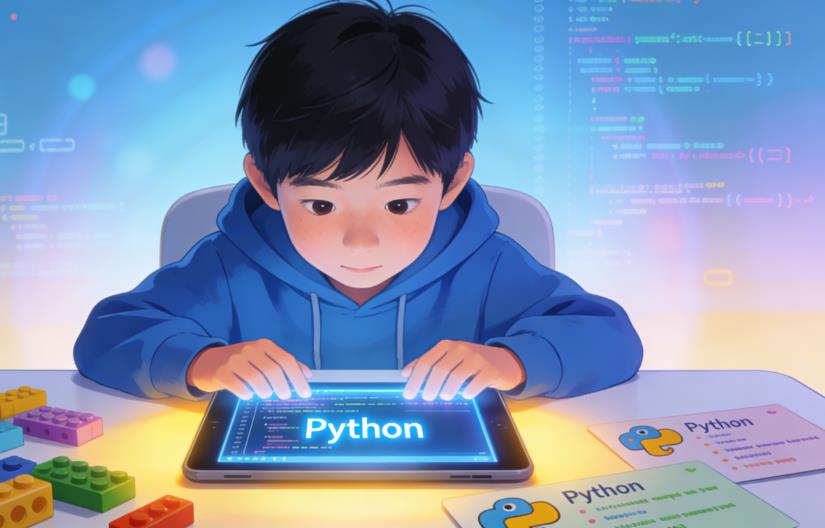
As a coding educator working with children across the U.S. and Europe, one of the most common questions I hear from parents is simple but important: Is Python a good first programming language for kids?
It’s a fair question—and an increasingly relevant one. With programming now considered a foundational skill alongside reading and math, parents want to make thoughtful choices about how their children begin their journey into technology. The first language matters. It shapes how children think about coding, whether they feel confident or frustrated, and whether they stay engaged long enough to truly benefit.
Python is often recommended as a beginner-friendly language, but is it really the right starting point for children? The answer is not a simple yes or no. It depends on the child’s age, learning style, goals, and the way Python is introduced.
In this article, we’ll explore the strengths and limitations of Python for kids, compare it with other beginner options, look at real classroom experiences, and help you decide whether Python is the right first step for your child.
What Makes a Programming Language “Good” for Kids?
Before evaluating Python specifically, it’s important to understand what we’re looking for in a first programming language for children.
A good beginner language should:
- Be easy to read and understand
- Provide quick visual or interactive feedback
- Encourage creativity and experimentation
- Minimize frustration from complex syntax
- Build strong foundational concepts (logic, sequencing, problem-solving)
Children don’t learn programming the same way adults do. They need immediate results, visual engagement, and a sense of play. If a language is too abstract or requires too much setup before producing visible results, kids can quickly lose interest.
This is why many younger learners start with block-based platforms—but Python enters the picture shortly after.
Why Python Is So Popular for Beginners
Python has become one of the most widely recommended beginner programming languages in the world, and for good reason.
Its popularity in education is driven by several key advantages.
Simple and Readable Syntax
Python’s syntax is often described as “close to English.” Compared to languages like Java or C++, Python code is significantly cleaner and easier to read.
For example:
print("Hello, world!")
Even a child with no coding background can guess what this does.
This simplicity reduces cognitive overload. Kids can focus on what they want to build instead of getting stuck on confusing punctuation or rules.
Immediate Results
Python allows kids to see results quickly. Whether it’s printing messages, creating simple games, or building small tools, the feedback loop is fast.
This is critical for motivation. Children stay engaged when they can experiment and immediately see what happens.
Real-World Relevance
Python is not just a “learning language.” It’s widely used in:
- Web development
- Game development
- Data science
- Artificial intelligence
- Automation
Parents often appreciate that their child is learning something practical and future-oriented, not just a simplified educational tool.
Strong Community and Resources
There are countless tutorials, courses, and kid-friendly platforms built around Python. This makes it easier for both teachers and parents to support learning.
When Python Works Well as a First Language
Based on classroom experience, Python can be an excellent first language—but usually under the right conditions.
Kids Aged 10 and Up
For most children, Python becomes a strong starting point around ages 10–12.
At this stage, kids typically:
- Can read and write comfortably
- Understand basic logic and sequences
- Have enough patience to debug simple errors
Younger children can learn Python, but it often requires more guidance and carefully designed lessons.
Kids Who Prefer Text Over Visual Blocks
Some children naturally prefer typing and writing over dragging blocks. These learners often transition smoothly into Python and may even find block-based tools limiting.
Goal-Oriented Learners
Python works especially well for kids who want to:
- Build simple games
- Create small apps or tools
- Automate tasks
- Explore AI or data projects later on
Because Python is versatile, it grows with the child.
When Python Might Not Be the Best First Choice
Despite its strengths, Python is not always the ideal starting point—especially for younger beginners.
Younger Children (Ages 6–9)
For younger kids, Python can feel abstract and less engaging.
They often benefit more from visual programming environments where they can:
- Drag and drop code blocks
- See animations instantly
- Experiment without worrying about syntax errors
Without this visual feedback, younger learners may struggle to stay interested.
Kids Who Get Frustrated Easily
Python still requires typing accuracy. A missing parenthesis or indentation error can break the code.
For some kids, this can lead to frustration early on, especially if they don’t yet have strong attention to detail.
Lack of Visual Output (at First)
Unlike visual platforms, Python doesn’t immediately produce animations or graphics unless additional libraries are introduced.
If lessons rely too heavily on text output (like printing messages), kids may find it boring.
Real Classroom Examples
To better understand how Python works in practice, here are a few real-world examples from teaching environments.
Case Study: Ethan, Age 11
Ethan started directly with Python after briefly trying block coding.
He enjoyed typing commands and quickly grasped variables and loops. Within a few weeks, he built a simple number guessing game.
What made Python work for him:
- Strong reading skills
- Interest in logic puzzles
- Patience with debugging
For Ethan, Python was the perfect first language.
Case Study: Sophia, Age 8
Sophia started with Python but struggled early on.
She became frustrated with small syntax errors and didn’t enjoy the lack of visual output. After switching to a block-based platform, her confidence improved dramatically.
Six months later, she returned to Python and found it much easier.
What this shows:
- Timing matters more than the language itself
- Confidence builds through early success
Case Study: Lucas, Age 13
Lucas wanted to learn game development.
He started with Python and used simple libraries to create text-based and later graphical games. His motivation stayed high because he had a clear goal.
Python worked well because it aligned with his interests.
Python vs Block-Based Programming
A common question from parents is whether to start with Python or with block-based coding platforms.
Here’s a practical comparison.
Block-Based Programming
Best for:
- Ages 6–10
- Complete beginners
- Visual learners
Advantages:
- No syntax errors
- Immediate visual feedback
- Highly engaging
Limitations:
- Limited scalability
- Eventually needs transition to text-based coding
Python
Best for:
- Ages 10+
- Kids ready for typing and structure
- Goal-oriented learners
Advantages:
- Real-world applications
- Clean syntax
- Long-term usefulness
Limitations:
- Less visual initially
- Requires attention to detail
A Hybrid Approach
In many cases, the most effective path is:
- Start with block-based coding (for confidence and engagement)
- Transition to Python (for depth and real-world skills)
This progression mirrors how many schools and coding academies structure their curriculum.
How to Introduce Python to Kids the Right Way
If you decide Python is the right choice, how it’s introduced makes a huge difference.
Start with Interactive Projects
Avoid starting with abstract concepts like variables and loops in isolation.
Instead, begin with projects such as:
- Simple games (guessing game, quiz game)
- Drawing with graphics libraries
- Small interactive programs
Projects create context and make learning meaningful.
Keep Lessons Short and Focused
Children have limited attention spans. Short, focused sessions are far more effective than long lectures.
Encourage Experimentation
Let kids modify code and see what happens. This builds curiosity and confidence.
Normalize Mistakes
Debugging is part of programming. Kids should understand that errors are not failures—they’re learning opportunities.
Use Visual Enhancements
Introducing simple graphics libraries early can make Python more engaging and less abstract.
Common Misconceptions About Python for Kids
“Python Is Too Advanced for Beginners”
In reality, Python is one of the simplest text-based languages available. The challenge is not the language itself, but how it’s taught.
“Kids Must Start with Python to Succeed”
This is not true. Many successful learners start with visual coding and transition later.
“Python Guarantees Future Success”
While Python is widely used, learning how to think computationally is far more important than the specific language.
Long-Term Benefits of Learning Python Early
When introduced at the right time, Python can provide long-term advantages.
Strong Programming Foundations
Concepts like loops, conditionals, and functions transfer to other languages easily.
Confidence with Real Code
Kids gain experience writing actual code, not just manipulating blocks.
Pathways to Advanced Topics
Python opens doors to:
- Artificial intelligence
- Data science
- Automation
- Web development
These fields are highly relevant in today’s job market.
A Balanced Perspective for Parents
So, is Python a good first programming language for kids?
The honest answer is:
Yes—for the right child, at the right time, and with the right approach.
It is not a one-size-fits-all solution, and it doesn’t need to be the very first step for every child.
Parents should consider:
- Age and maturity
- Interest level
- Learning style
- Access to guidance or structured learning
Python is a powerful, flexible, and beginner-friendly programming language that can serve as an excellent introduction to coding for many children.
However, success doesn’t come from the language alone. It comes from:
- Thoughtful teaching
- Engaging projects
- Encouragement and patience
- A progression that matches the child’s development
If your child is ready for text-based coding and shows curiosity about how things work behind the scenes, Python can be a fantastic starting point.
If they’re younger or just beginning to explore, starting with visual tools and transitioning later may lead to a more positive and lasting experience.
In the end, the goal is not just to learn Python—it’s to help children develop problem-solving skills, creativity, and confidence in a digital world.
And when approached thoughtfully, Python can absolutely be part of that journey.

Leave a Reply