As technology continues to shape nearly every aspect of modern life, more parents are asking an important question: When should my child start learning programming? This is especially common among families in the United States, Canada, the UK, and other Western countries where digital literacy is increasingly seen as essential—not optional.
The short answer is that there is no single “perfect” age. The long answer is far more interesting—and useful. The ideal starting point depends on a combination of cognitive development, learning style, exposure to technology, and the way programming is introduced.
This guide explores the topic in depth, grounded in child development research, educational trends, and real-world teaching experience.
Understanding Programming as a Skill, Not Just a Subject
Before discussing age, it’s important to clarify what “learning programming” actually means for children.
For adults, programming often implies writing code in languages like Python or JavaScript. For kids, however, programming is better understood as a way of thinking—often referred to as computational thinking. This includes:
- Problem-solving
- Logical reasoning
- Pattern recognition
- Creativity through structured systems
In Western education systems, especially in the U.S. and UK, there has been a shift toward integrating these skills early, even before formal coding syntax is introduced.
This distinction matters because a 6-year-old doesn’t need to write complex code to begin learning programming concepts. Instead, they can develop foundational thinking skills through play-based and visual tools.
Cognitive Development and Readiness by Age Group
Ages 4–6: Early Exposure Through Play
Children in this age range are in the preoperational stage of cognitive development. They learn best through:
- Visual interaction
- Storytelling
- Hands-on exploration
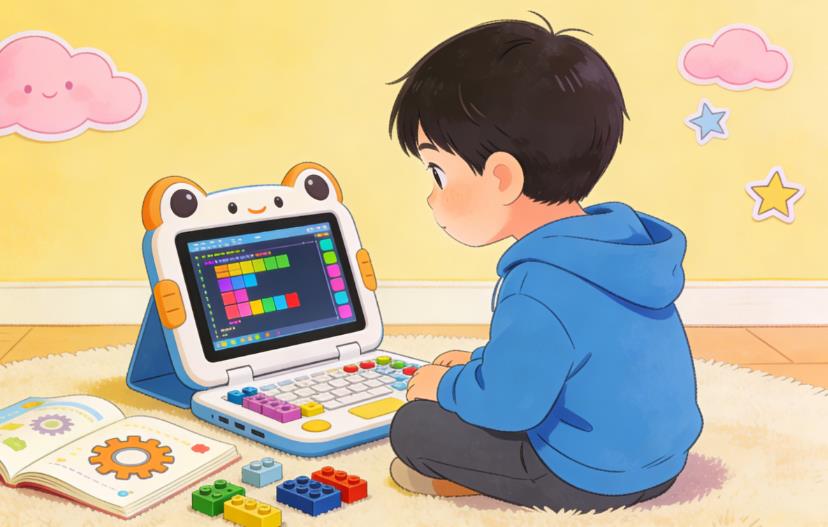
At this stage, programming should not involve typing code. Instead, children can engage with:
- Block-based programming tools (like drag-and-drop interfaces)
- Logical games and puzzles
- Story-based coding activities
In many Western countries, tools like ScratchJr are commonly used in kindergarten and early elementary classrooms. These platforms allow children to create simple animations while learning sequencing and cause-and-effect relationships.
Real-world example:
A kindergarten teacher in California introduced a weekly “coding storytime” session using tablet-based programming apps. One student, age 5, created a simple animated story where a character moves across the screen when a button is pressed. While this may seem basic, it demonstrates early understanding of input-output relationships—a core programming concept.
At this age, the goal is not mastery, but familiarity and curiosity.
Ages 7–9: Building Logical Foundations
Around age 7, children enter the concrete operational stage. This is when they begin to:
- Understand logical sequences
- Follow structured instructions
- Recognize patterns more clearly
This is widely considered an excellent age to start learning programming in a structured way.
Children can now:
- Use platforms like Scratch (widely adopted in U.S. and UK schools)
- Create simple games and animations
- Understand loops, conditions, and events at a basic level
Real-world example:
In a London primary school coding club, an 8-year-old student built a simple maze game using Scratch. The student programmed a character to respond to keyboard inputs and detect collisions with walls. Over a few weeks, the project evolved to include scoring and sound effects.
This demonstrates how children at this age can move from passive consumption of technology to active creation.
Parents often notice increased confidence as children realize they can build things themselves.
Ages 10–12: Transition to Text-Based Thinking
Between ages 10 and 12, children become capable of more abstract thinking. This is when many educators begin introducing:
- Basic text-based programming languages (like Python)
- More complex logic structures
- Debugging and problem-solving strategies
At this stage, students can:
- Understand variables and functions
- Work on multi-step projects
- Collaborate with peers on coding tasks
In Western education systems, this age group often corresponds with middle school STEM programs or extracurricular coding academies.
Real-world example:
A 11-year-old student in Toronto enrolled in an after-school Python class. Within three months, they created a simple quiz game that stored user scores and provided feedback. The student initially struggled with syntax errors but gradually developed persistence and debugging skills.
This highlights an important benefit of programming: it teaches resilience and iterative thinking.
Ages 13 and Above: Specialization and Real-World Application
Teenagers can approach programming with a level of independence and depth similar to adults.
At this stage, students can:
- Learn multiple programming languages
- Build real-world projects (websites, apps, games)
- Participate in coding competitions or hackathons
In the U.S., high school students often engage in:
- AP Computer Science courses
- Robotics teams
- Open-source projects
Real-world example:
A high school student in Texas developed a mobile app to help classmates track homework assignments. The project started as a simple idea but eventually included user accounts and notifications.
By this age, programming can shift from a learning activity to a potential career pathway.
So, What Is the “Best” Age?
Based on both research and practical teaching experience, a nuanced answer emerges:
- Ages 5–6: Ideal for playful exposure
- Ages 7–9: Best for structured introduction
- Ages 10–12: Optimal for deeper learning
- Ages 13+: Suitable for specialization
If forced to choose a single “best” starting point, many educators in Western countries would point to ages 7–9. This is when children are cognitively ready, yet still open and curious enough to embrace new concepts without fear.
However, starting earlier or later is absolutely fine. What matters more than age is approach.
Factors More Important Than Age
Interest and Motivation
A child who is curious and engaged will learn faster than one who is simply following instructions.
Parents should look for signs such as:
- Enjoyment of puzzles or games
- Interest in how apps or games work
- Desire to create things digitally
Forcing programming too early can backfire, especially in Western parenting cultures that emphasize autonomy and intrinsic motivation.
Teaching Method
The way programming is introduced has a huge impact.
Effective approaches include:
- Project-based learning
- Game-based environments
- Visual programming tools
- Real-world problem-solving
Ineffective approaches often involve:
- Overly technical instruction too early
- Memorization without understanding
- Lack of creativity
Consistency Over Intensity
In many Western families, parents enroll children in intensive coding camps expecting rapid progress. However, research suggests that consistent, moderate exposure is far more effective.
For example:
- 1–2 sessions per week over several months
- Gradual increase in complexity
- Opportunities for independent exploration
Social Environment
Children often learn better when programming is a shared experience.
This can include:
- Coding clubs at school
- Group classes
- Parent-child projects
In the U.S. and UK, community-based STEM programs have shown strong results in keeping children engaged long-term.
Addressing Common Parent Concerns
“Will starting too early harm my child?”
No—if done correctly. Early exposure through play is beneficial and aligns with how young children naturally learn.
Problems arise only when:
- Expectations are too high
- Activities are not age-appropriate
- Learning becomes stressful
“Is programming replacing other important skills?”
Programming should complement—not replace—other activities.
Balanced development still includes:
- Physical activity
- Social interaction
- Creative play (art, music, storytelling)
In fact, programming often enhances creativity rather than limiting it.
“What if my child isn’t interested?”
Not every child will enjoy programming—and that’s okay.
However, interest can often be developed through the right approach. For example:
- A child who loves storytelling might enjoy creating animated stories
- A child who likes games might enjoy building simple games
The key is to connect programming with existing interests.
Long-Term Benefits of Starting at the Right Time
When introduced appropriately, programming offers benefits far beyond technical skills:
- Improved problem-solving ability
- Greater confidence in tackling challenges
- Enhanced logical thinking
- Preparation for future careers
In Western economies, where technology-driven jobs continue to grow, these skills are increasingly valuable—even for non-technical careers.
A Practical Recommendation for Parents
If you’re a parent wondering when to start, here’s a simple guideline:
- Start introducing concepts through play around age 5–6
- Begin structured learning around age 7–9
- Transition to real coding around age 10+
Most importantly:
- Keep it fun
- Follow your child’s pace
- Focus on creativity, not perfection
The question “What is the best age to start learning programming?” doesn’t have a one-size-fits-all answer. But the evidence is clear: children are capable of engaging with programming concepts far earlier than many people assume.
In Western educational contexts, the trend is moving toward earlier exposure—not because children are expected to become professional programmers, but because programming develops essential thinking skills.
Ultimately, the best age is not defined by a number, but by readiness, interest, and the quality of the learning experience.
A child who starts at age 6 with curiosity and joy will likely benefit more than one who starts at age 10 under pressure. And a child who starts at age 12 with strong motivation can still progress rapidly.
Programming is not a race—it’s a journey. And like any meaningful journey, the starting point matters less than the path taken along the way.

Leave a Reply