In today’s increasingly digital world, programming has become an essential skill. Many parents ask whether their children, especially beginners, can realistically create real-world projects using Python. The answer is a resounding yes. Python is not only beginner-friendly but also powerful enough to develop projects that mirror what professional developers do. Through careful guidance, structured learning, and creative project design, kids can develop practical skills and build projects they can be proud of.
Why Python is Ideal for Kids
Python is widely regarded as one of the most accessible programming languages for beginners. Its syntax is clear, readable, and intuitive, which allows children to focus on problem-solving rather than getting bogged down by complex coding conventions. Unlike languages such as C++ or Java, Python eliminates unnecessary syntax clutter, enabling children as young as 8 or 9 to write functional programs.
Furthermore, Python supports multiple programming paradigms, including procedural, object-oriented, and functional programming. This versatility means that as kids advance, they can explore more sophisticated concepts without switching to a new language. Python also has a vast ecosystem of libraries and frameworks, from web development to data science, which allows children to create diverse projects with real-world applications.
Building Foundational Skills
Before diving into real-world projects, children need to acquire foundational programming skills. This typically includes understanding variables, data types, conditionals, loops, functions, and basic input/output. Python makes these concepts tangible through interactive exercises, mini-projects, and gamified learning experiences.
For instance, children can start by building small console applications like calculators or text-based games. These projects teach problem decomposition, logical thinking, and debugging, which are essential skills for tackling larger, real-world projects.
Examples of Real-World Python Projects for Kids
- Simple Web Applications
Kids can build basic websites using Python frameworks like Flask or Django. A beginner-friendly project might involve creating a personal blog, a to-do list manager, or a recipe-sharing platform. Through these projects, children learn about web routing, handling user input, and integrating data storage. For example, one of my students, a 12-year-old, developed a small website to organize his school homework. By the end of the project, he not only had a functioning web app but also understood the basics of web development. - Data Analysis Projects
Python’s data analysis libraries, such as Pandas and Matplotlib, allow children to analyze real-world data. Kids can collect data from sources like public datasets or simple surveys and visualize it. A popular project among middle school students involves analyzing school cafeteria menus to determine trends in nutrition, such as the average calories per meal. This teaches children how to process data, calculate statistics, and present results graphically—skills highly relevant to STEM fields. - Games and Interactive Applications
Games are a natural way to engage children while teaching programming. Libraries like Pygame allow students to create interactive games such as platformers, puzzles, or simple simulations. One of my students, age 10, created a maze game that kept track of the player’s score and included obstacles that increased in difficulty over time. This project taught him about event handling, object-oriented programming, and game logic, all while keeping the process fun and motivating. - Automation Tools
Automation is another area where kids can apply Python in practical ways. Scripts that automate repetitive tasks, such as renaming files, organizing folders, or sending email reminders, give children a sense of accomplishment. For instance, a 13-year-old student wrote a Python script that automatically sorted her digital art files into folders based on creation date and file type. Not only did this solve a real problem, but it also introduced her to practical uses of Python in daily life. - Robotics and Hardware Projects
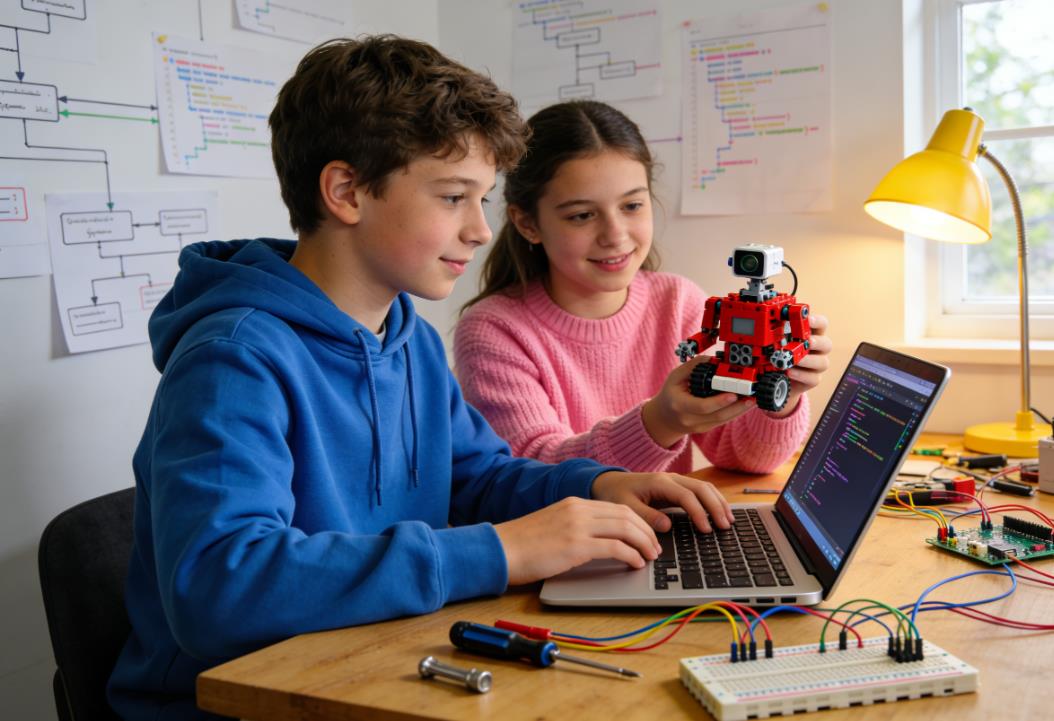
Python can be used to control hardware through platforms like Raspberry Pi or Micro:bit. Kids can build projects like automated plant watering systems, simple robots, or IoT devices. One memorable example from my classes involved students programming a Raspberry Pi to monitor room temperature and control a fan. The children learned Python programming alongside electronics, which bridged the gap between software and hardware in a tangible, hands-on way.
Real-World Learning Beyond the Classroom
Building real-world projects helps children develop more than just technical skills. It encourages creativity, problem-solving, and project management. When children work on projects that have tangible outcomes, they experience the full lifecycle of software development: brainstorming ideas, planning, coding, debugging, and presenting their work. This process mirrors professional programming experiences, preparing them for future academic and career opportunities.
Parents can support this learning by providing access to appropriate tools, encouraging independent experimentation, and celebrating successes—even small ones. For example, hosting a “mini hackathon” at home or showcasing completed projects to family members can reinforce the value of persistence and creativity.
Overcoming Challenges
While the potential is vast, kids may encounter challenges when building real-world projects. Debugging can be frustrating, and complex projects may feel overwhelming. The key is incremental learning. Start with manageable projects and gradually increase complexity. Encourage collaboration with peers, use online resources, and celebrate progress rather than perfection.
For example, a student might first build a text-based adventure game before attempting a graphical game with Pygame. This approach ensures that learning is scaffolded and confidence grows with experience.
The Role of Mentorship and Guidance
Guidance from a teacher or mentor is critical in helping children navigate challenges and maintain motivation. In my experience, students who receive structured support can tackle projects that might initially seem too advanced. Mentorship involves not only teaching Python syntax but also guiding project planning, troubleshooting, and understanding real-world applications.
Long-Term Benefits of Project-Based Learning
Children who engage in real-world Python projects gain more than coding skills. They develop logical thinking, creativity, perseverance, and the ability to tackle complex problems. These skills are transferable to other subjects and real-life challenges. Additionally, early experience with Python can pave the way for advanced programming, web development, data science, and even entrepreneurship in technology.
Kids absolutely can build real-world projects with Python. From simple web applications and games to data analysis and hardware integration, Python provides a versatile platform for creativity and practical learning. The key to success lies in fostering a supportive learning environment, encouraging project-based learning, and gradually increasing complexity. With the right guidance, children can not only code but also create meaningful projects that have tangible outcomes—skills that will serve them well in school, career, and life.
Through real-world projects, children gain confidence, problem-solving ability, and a sense of accomplishment. They see that coding is not just about writing lines of code, but about creating solutions, expressing ideas, and building things that matter. For parents and educators, this reinforces the idea that programming is not an abstract skill—it is a gateway to creativity, innovation, and lifelong learning.

Leave a Reply