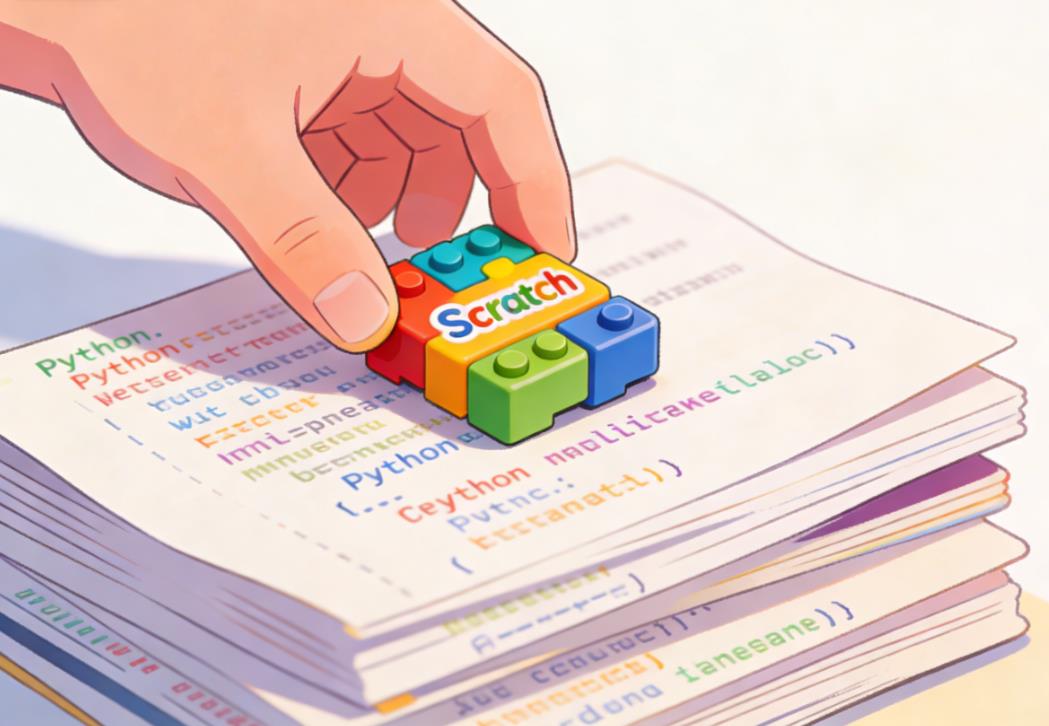
For many children, learning programming begins with Scratch, a visual, block-based language developed by the MIT Media Lab. Scratch is designed to introduce fundamental programming concepts such as sequencing, loops, conditionals, variables, and event-driven programming without requiring children to deal with the complexities of syntax. This makes it an ideal starting point for young learners, particularly between ages 6 and 12.
However, as children grow older and their programming skills advance, parents and educators often ask: How long should a child remain on Scratch before moving to Python, a text-based programming language that is widely used both in professional environments and educational contexts? The answer is nuanced and depends on multiple factors including the child’s age, cognitive development, confidence level, problem-solving skills, and motivation.
Scratch as a Foundation for Computational Thinking
Scratch provides a gentle introduction to computational thinking—the process of logically approaching problems, breaking them down into smaller steps, and systematically devising solutions. Children who have mastered Scratch often demonstrate a strong understanding of concepts like:
- Loops: Using “repeat” blocks to iterate actions multiple times.
- Conditionals: Using “if/else” blocks to make decisions based on events or variables.
- Variables: Storing and manipulating data such as scores, timers, or user inputs.
- Event-driven programming: Reacting to user inputs or sprite interactions.
- Debugging and problem-solving: Identifying errors and reasoning through solutions, often visually.
While Scratch is visual, it encapsulates the logic and structure of programming. Many studies in educational technology suggest that children who spend sufficient time learning Scratch demonstrate improved algorithmic thinking and problem decomposition skills, which are critical for text-based languages like Python.
For example, a 10-year-old student named Emma from Boston participated in a Scratch coding club for 18 months. During this period, she created games, animated stories, and interactive simulations. Her teacher observed that Emma could confidently use loops, conditionals, and variables to manage complex game logic. By the end of the program, she was able to explain the steps of her projects in pseudocode—an important intermediary skill that prepares students for text-based coding.
Indicators That a Child Is Ready to Transition
There is no fixed “time limit” for staying on Scratch. Rather, readiness depends on skill mastery and conceptual understanding. Some children may be ready after 6–12 months of consistent practice, while others may need several years. Key indicators of readiness include:
1. Mastery of core programming concepts
Before moving to Python, children should have a solid grasp of variables, loops, conditionals, and event-driven logic. They should be able to apply these concepts in multi-step projects without relying heavily on step-by-step instructions.
2. Ability to think algorithmically
Children should demonstrate the ability to plan the steps of a project logically before implementing it. For instance, they can outline the flow of a game or a story, identify necessary loops, and anticipate possible outcomes of conditionals.
3. Comfort with problem-solving and debugging
Transitioning to Python requires writing code in text form, which is more prone to syntax errors. Children should already exhibit patience and resilience in debugging visual code in Scratch, as this mindset transfers directly to Python.
4. Interest and motivation
Readiness also depends on motivation. Some children become frustrated with visual blocks after several years and are eager to try text-based coding. Others may be comfortable with Scratch for longer periods and need encouragement to explore Python.
Recommended Timeline for Transition
While there is flexibility, research and practical experience suggest the following general timelines:
- Ages 6–8: Primarily focus on Scratch to develop interest and familiarity with basic programming concepts. Children at this age benefit from creative projects like interactive stories and simple games.
- Ages 8–10: Extend Scratch learning to more complex projects involving variables, broadcast events, and nested loops. Encourage children to explain their code and create their own designs.
- Ages 10–12: Begin introducing the idea of text-based coding through hybrid approaches, such as using Scratch extensions for Python (like ScratchX or Turtle modules) or block-to-text coding platforms. Some children may begin Python basics, such as simple arithmetic, loops, and conditionals.
- Ages 12+: Children who have mastered Scratch concepts are often ready for a full transition to Python. At this stage, students are cognitively capable of handling abstract syntax and can relate Scratch logic to text-based programming.
For example, Liam, an 11-year-old in London, spent three years on Scratch before beginning Python. His progression included creating increasingly complex games and simulations. Once he started Python, he quickly grasped syntax and was able to replicate Scratch projects in Python within weeks, demonstrating the value of a strong Scratch foundation.
Hybrid Transition Approaches
Some educators recommend a gradual hybrid approach rather than an abrupt switch from Scratch to Python. Hybrid methods can include:
- Block-to-text platforms: Tools like Scratch 3.0’s “Python Mode” or MakeCode allow children to see both block-based and text-based versions of the same program. This helps them make direct connections between visual and text syntax.
- MicroPython with physical devices: Platforms like micro:bit or LEGO SPIKE Prime use block-based programming initially, then allow a transition to MicroPython for more advanced projects. Children can start controlling physical devices while learning Python syntax.
- Turtle graphics in Python: Turtle graphics allow children to manipulate shapes and drawings in Python, which is conceptually similar to moving sprites in Scratch. This provides a familiar visual feedback loop while introducing text-based syntax.
These hybrid approaches reduce cognitive load, making the transition smoother and helping children maintain confidence while encountering the new challenges of Python.
Common Challenges During Transition
Even with readiness indicators, transitioning to Python can pose challenges:
1. Syntax sensitivity
Unlike Scratch, Python requires precise syntax, including proper indentation, punctuation, and spelling. Children who have only used blocks may initially struggle with these details. Teachers can use guided exercises, pair programming, and code templates to reduce frustration.
2. Conceptual gaps
Some Scratch concepts, like event broadcasting, do not have a direct one-to-one mapping in Python. Educators should explicitly teach equivalent Python structures, such as functions and event listeners, and emphasize abstraction.
3. Decreased visual feedback
Scratch provides instant visual results, which can be motivating for young learners. Python programs may produce outputs in text or console form, which may feel less immediately rewarding. Combining Python with visual libraries like Pygame, Tkinter, or Turtle helps maintain engagement.
4. Patience and resilience
Debugging in Python can be more demanding. Children need to develop resilience and problem-solving skills to persist through errors. Structured support from teachers and parents is essential during this phase.
Case Studies from Educational Practice
Case Study 1: New York Coding Academy
At a coding academy in New York, students aged 9–11 participated in a two-year Scratch curriculum before transitioning to Python. Teachers observed that students who had spent at least 18 months on Scratch projects were able to recreate similar projects in Python within 6–8 weeks. Students who transitioned too early (after only 6 months of Scratch) struggled with debugging and often reverted to visual aids.
Case Study 2: European Online Coding Program
In an online program targeting children in Germany and the Netherlands, students aged 10–12 began learning Python alongside Scratch after demonstrating mastery of loops, variables, and event-driven logic. The hybrid approach involved using ScratchX extensions to display Python code equivalents. Within three months, most students were comfortable writing small Python programs independently and could collaborate on team projects.
Case Study 3: Home-based Learning
A parent in Seattle shared that her 12-year-old son had been using Scratch for four years and had built a portfolio of over 30 games and interactive stories. When he began Python, he quickly adapted to text-based coding, often comparing Scratch blocks to Python functions. This experience highlights the value of sustained, project-based Scratch learning before moving to text-based languages.
Practical Recommendations for Parents and Educators
- Focus on concepts, not just time
Instead of counting months or years, assess the child’s mastery of core programming concepts. Confidence in using loops, conditionals, variables, and event-driven logic is more important than the total time spent in Scratch. - Use project-based milestones
Set goals for Scratch projects, such as creating a multi-level game, an animated story, or a simulation. Once children can complete these projects independently and explain their code, they are likely ready for Python. - Introduce text-based elements gradually
Start with visual-to-text hybrids, Turtle graphics, or micro:bit programming to bridge the gap. Avoid overwhelming children with complex syntax at the start. - Encourage problem-solving and debugging
Teach children that errors are a natural part of coding. Celebrating small successes and learning from mistakes builds resilience that will benefit them in Python and beyond. - Tailor to the child’s interests
Children who are motivated by games may transition faster using Python game libraries, while those interested in stories or animations may benefit from text-based storytelling projects. - Monitor and adjust
Every child’s learning pace is different. Frequent assessment, observation, and conversations about their comfort and confidence levels will help determine the right time to transition.
There is no universal timeframe for how long a child should stay on Scratch before moving to Python. Instead, readiness should be evaluated based on mastery of programming concepts, problem-solving ability, confidence, and motivation. In general, children aged 10–12 with 1–3 years of Scratch experience are often ready to transition, particularly when guided through hybrid approaches that bridge visual and text-based programming.
Successful transitions involve gradual exposure, project-based milestones, and structured support. Children who have developed a strong foundation in Scratch, as demonstrated through complex projects and algorithmic thinking, typically adapt quickly to Python. For educators and parents, the key is to focus on the child’s understanding and enthusiasm rather than adhering to a strict timeline.
By thoughtfully timing the move from Scratch to Python, children can enjoy a smooth learning journey that builds deep programming skills, nurtures creativity, and prepares them for advanced coding challenges and real-world applications.

Leave a Reply