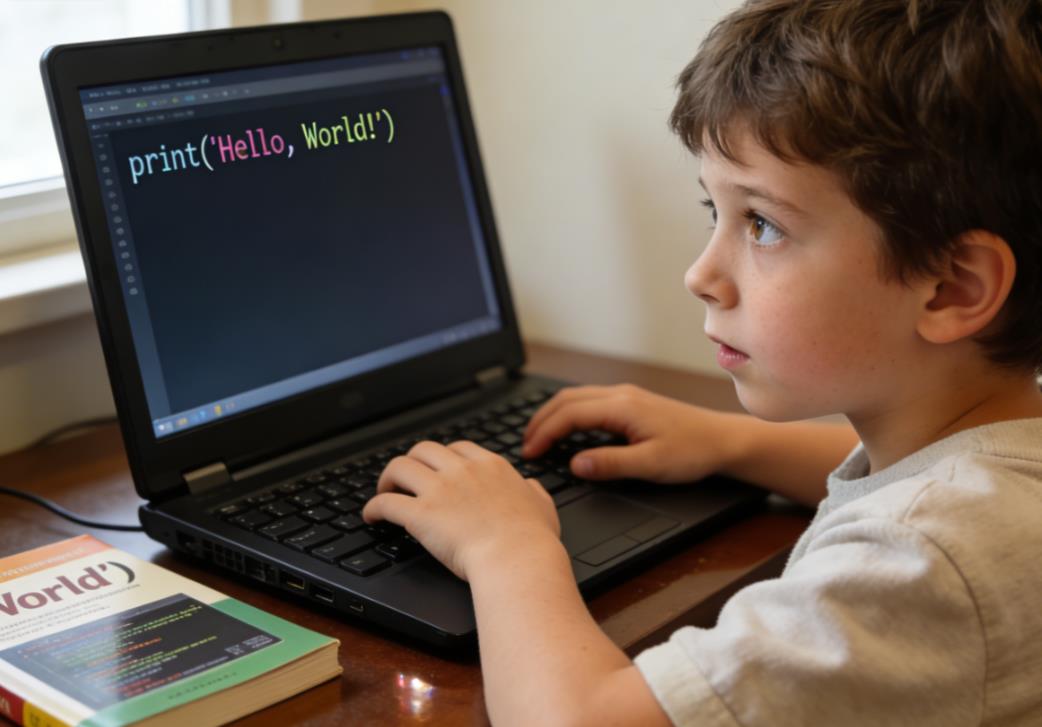
When parents ask, “At what age can a child realistically start learning Python?”, they are usually not just asking about age—they are asking about readiness, cognitive development, motivation, and long-term outcomes. In Western education systems, especially across the United States, the United Kingdom, Canada, and parts of Europe, there has been a steady shift toward introducing computational thinking earlier in a child’s education. However, Python, as a text-based programming language, sits at an interesting intersection: it is beginner-friendly compared to other languages, yet it still requires a level of abstract thinking that not all young children have fully developed.
The short answer is that most children can realistically begin learning Python between the ages of 10 and 14. But that range is only a guideline, not a rule. Some children can start earlier under the right conditions, while others may benefit from waiting until later. What matters far more than chronological age is developmental readiness.
Understanding what “learning Python” actually means is the first step in answering this question responsibly. For some families, it means writing simple scripts, printing text, and learning basic variables. For others, it means building games, working with data, or even exploring artificial intelligence concepts. The level of depth expected changes the appropriate starting age significantly.
Cognitive readiness and abstract thinking
Python is often praised for its readability and simple syntax, which is true. However, even basic Python concepts—such as variables, loops, and conditionals—require a child to think abstractly. They need to understand that a symbol can represent a value, that instructions can be repeated, and that a program follows logical rules rather than human intuition.
In developmental psychology, these abilities typically begin to solidify during what is known as the “concrete operational stage” and continue to develop into the “formal operational stage,” roughly between ages 7 and 12. Around age 10 or 11, many children begin to handle abstract reasoning more comfortably, which makes this a natural entry point for text-based programming.
This does not mean younger children cannot code. In fact, many children as young as 6 or 7 are introduced to programming through visual languages like Scratch. These platforms remove syntax barriers and allow children to focus on logic and creativity. By the time a child transitions to Python, they ideally already understand sequencing, loops, and conditionals conceptually.
Language and literacy skills
Another critical factor is reading and writing ability. Python relies on typed commands, and even small syntax errors can cause frustration. Children who are still developing basic literacy skills may struggle not because they lack logical ability, but because they cannot yet comfortably read instructions or debug errors.
In Western classrooms, Python is often introduced around middle school, typically grades 6 through 8. At this stage, students usually have sufficient reading comprehension to follow documentation, interpret error messages, and write simple programs.
A child who reads fluently, can follow multi-step instructions, and has some patience for problem-solving is far more likely to succeed with Python than a younger child who may be equally intelligent but less developed in these areas.
The role of prior coding experience
One of the strongest predictors of success with Python is not age, but prior exposure to coding concepts. Children who have used tools like Scratch, Blockly, or even robotics kits tend to transition much more smoothly.
For example, a 9-year-old who has spent two years building games in Scratch may be more prepared for Python than a 12-year-old who has never encountered programming before. The former already understands loops, events, and logic—they simply need to learn syntax.
In contrast, a complete beginner must learn both logic and syntax simultaneously, which can be overwhelming.
A common pathway seen in Western education looks like this:
Early elementary (ages 5–7): exposure to logic through games and visual tools
Late elementary (ages 8–10): deeper work with block-based programming
Middle school (ages 10–13): transition to text-based languages like Python
High school (ages 14+): advanced projects, data science, or multiple languages
This progression aligns with both cognitive development and educational standards.
Real classroom examples from Western contexts
In my own teaching experience working with children in the US and Europe, I have seen a wide range of starting points.
One student in California began learning Python at age 9. However, this was not his first exposure to coding. He had already spent over a year working with Scratch and LEGO robotics. When he started Python, he quickly grasped basic syntax and began building simple games within a few months. His success was not due to his age alone, but his preparation and strong interest.
In contrast, I worked with a 12-year-old student in the UK who had no prior coding experience. Despite being older, she initially struggled with Python. Concepts like loops and variables were completely new to her, and she found debugging frustrating. However, after spending time reinforcing foundational concepts—sometimes even stepping back into visual programming—she made steady progress and eventually became confident.
Another example comes from a group class in Canada where students aged 10 to 13 were introduced to Python together. The younger students who had prior coding experience often outperformed older beginners. This reinforced the idea that readiness is not strictly tied to age.
These cases illustrate an important point: age provides a general guideline, but individual background and mindset matter more.
Motivation and interest
A child’s interest level plays a crucial role in determining when they are ready to learn Python. Some children are naturally curious about how games work or want to build their own apps. Others may not yet see the appeal.
Forcing a child to learn Python too early can lead to frustration and negative associations with coding. On the other hand, introducing it when a child is genuinely curious can lead to rapid progress and deep engagement.
In Western education, there is a growing emphasis on student-driven learning. Many schools and after-school programs encourage children to explore coding through projects that align with their interests, such as game design, animation, or data visualization.
When a child sees a clear purpose—such as creating a game or automating a task—they are more willing to work through challenges.
The importance of teaching approach
How Python is introduced can significantly impact whether a child succeeds. A traditional, lecture-based approach may not be effective for younger learners. Instead, project-based learning is widely considered best practice.
For example, rather than starting with abstract concepts, a lesson might begin with a simple game or interactive story. As the child builds the project, they naturally encounter variables, loops, and conditionals.
In the US and Europe, many coding programs emphasize this hands-on approach. Platforms like Jupyter notebooks, simple game libraries, and beginner-friendly frameworks allow children to see immediate results from their code.
The pacing also matters. Younger learners benefit from shorter sessions, clear goals, and frequent positive reinforcement.
When is it too early?
While some children can start Python as early as 8 or 9, this is generally the exception rather than the norm. Starting too early can lead to several challenges:
Difficulty understanding abstract concepts
Frustration with syntax errors
Short attention spans during debugging
Reduced confidence if progress is slow
For most children under 10, it is more effective to focus on foundational skills through visual programming and logical games. This builds confidence and prepares them for a smoother transition later.
Parents in Western countries are sometimes eager to introduce advanced skills early, especially given the emphasis on STEM education. However, accelerating too quickly can backfire. A strong foundation is more valuable than early exposure to complex tools.
When is it too late?
On the other end of the spectrum, it is almost never “too late” to start learning Python during childhood or adolescence. Many students begin in high school and go on to pursue computer science successfully.
In fact, older beginners often have advantages. They typically have stronger reading skills, better focus, and more developed problem-solving abilities. They can move through beginner material more quickly and tackle complex projects sooner.
In Western high schools, Python is commonly used in introductory computer science courses. Students who start at 14 or 15 can still achieve a high level of proficiency before college.
Balancing expectations for parents
Parents often want a clear answer, but the reality is nuanced. Instead of asking, “What is the perfect age?”, it is more helpful to consider a set of readiness indicators.
A child may be ready to start Python if they can:
Read and write comfortably in English
Follow multi-step instructions
Understand basic logical concepts like “if” and “repeat”
Stay focused on a task for at least 20–30 minutes
Show curiosity about technology or problem-solving
If these conditions are met, introducing Python can be a positive experience.
If not, it may be better to build foundational skills first.
Practical recommendations for Western families
For families in the US, UK, and similar education systems, a practical approach might look like this:
Ages 6–8: focus on logical thinking through games and visual tools
Ages 8–10: deepen understanding with block-based programming
Ages 10–12: introduce Python gradually through simple projects
Ages 12+: expand into more complex applications and real-world use cases
This progression aligns with both school curricula and cognitive development.
It is also important to keep learning enjoyable. Coding should feel like exploration, not a chore.
The long-term perspective
Ultimately, the goal is not just to learn Python, but to develop computational thinking, creativity, and problem-solving skills. Python is simply a tool—a very useful one, but still just a tool.
Children who start at the “right” time for them are more likely to build confidence, enjoy the process, and continue learning. Those who start too early or under pressure may lose interest.
In Western education systems, there is increasing recognition that depth of understanding matters more than early exposure. A child who starts Python at 12 with strong fundamentals may outperform one who started at 8 without proper support.
Conclusion
So, at what age can a child realistically start learning Python?
For most children, the realistic and effective starting point is between ages 10 and 14. Some may begin earlier with the right preparation and interest, while others may start later and still succeed.
The key is not to focus solely on age, but on readiness—cognitive, emotional, and motivational. With the right foundation, teaching approach, and support, Python can become an accessible and rewarding skill for children across a wide age range.
For parents and educators in Western contexts, the best strategy is to build a strong base first, introduce Python at the appropriate time, and keep the experience engaging and meaningful.

Leave a Reply